
Late one night not long ago, my brother-in-law drove us several dozen miles to a lonely lighthouse. You might wonder, why a lighthouse. One answer could be that it had become something of a habit: On both immediately previous days, he had driven us several dozen miles to a quite different lonely lighthouse.
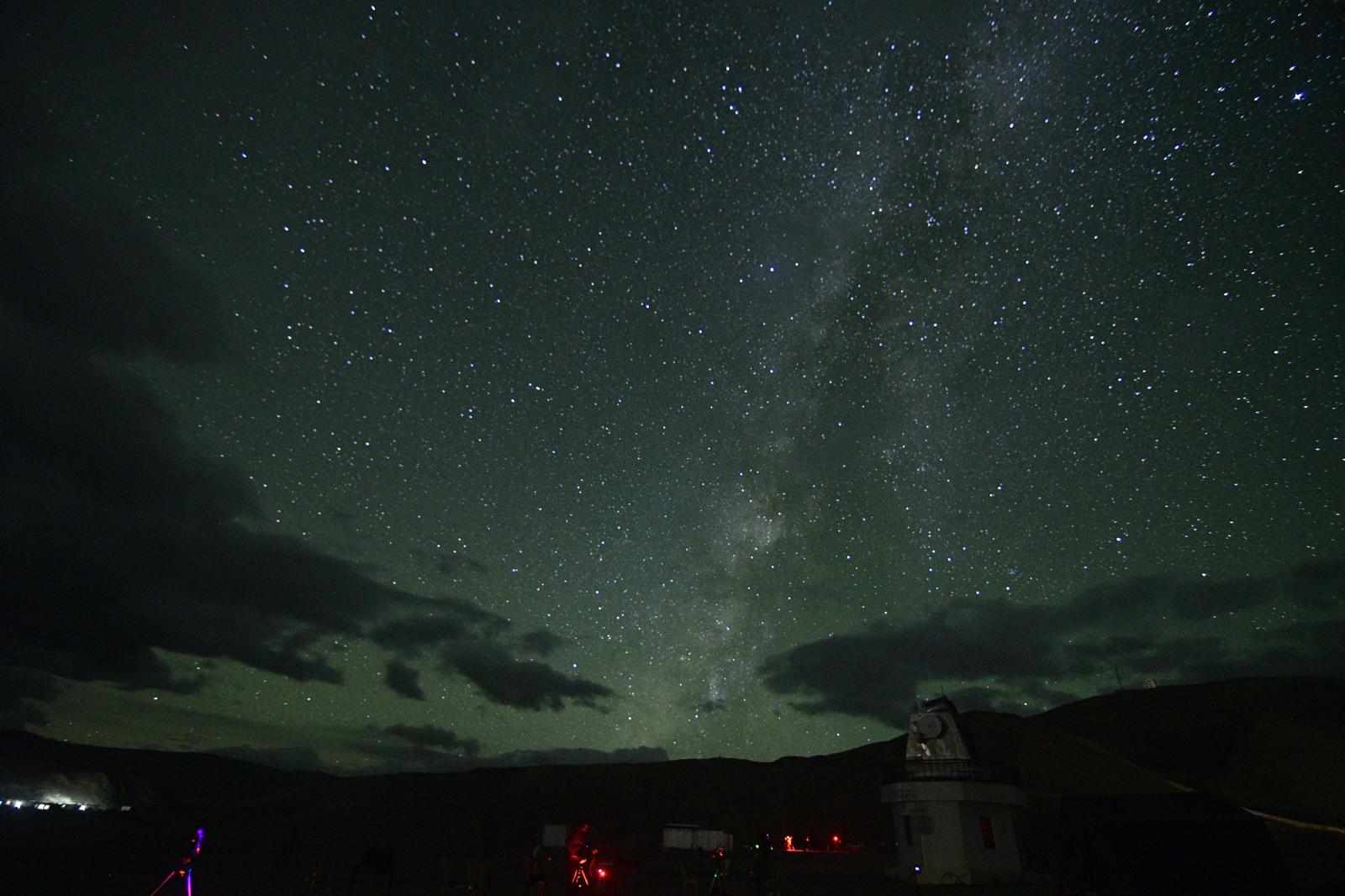
But no, not habit. This late night, we wanted to photograph the night sky. As it happened, it was a new moon night, and there were no clouds. So we knew we'd get some good shots. Still, why the lighthouse? Because just the night sky is just thousands of tiny dots. Photography-wise, can be boring. But put the lighthouse in the foreground? Now you've got something.
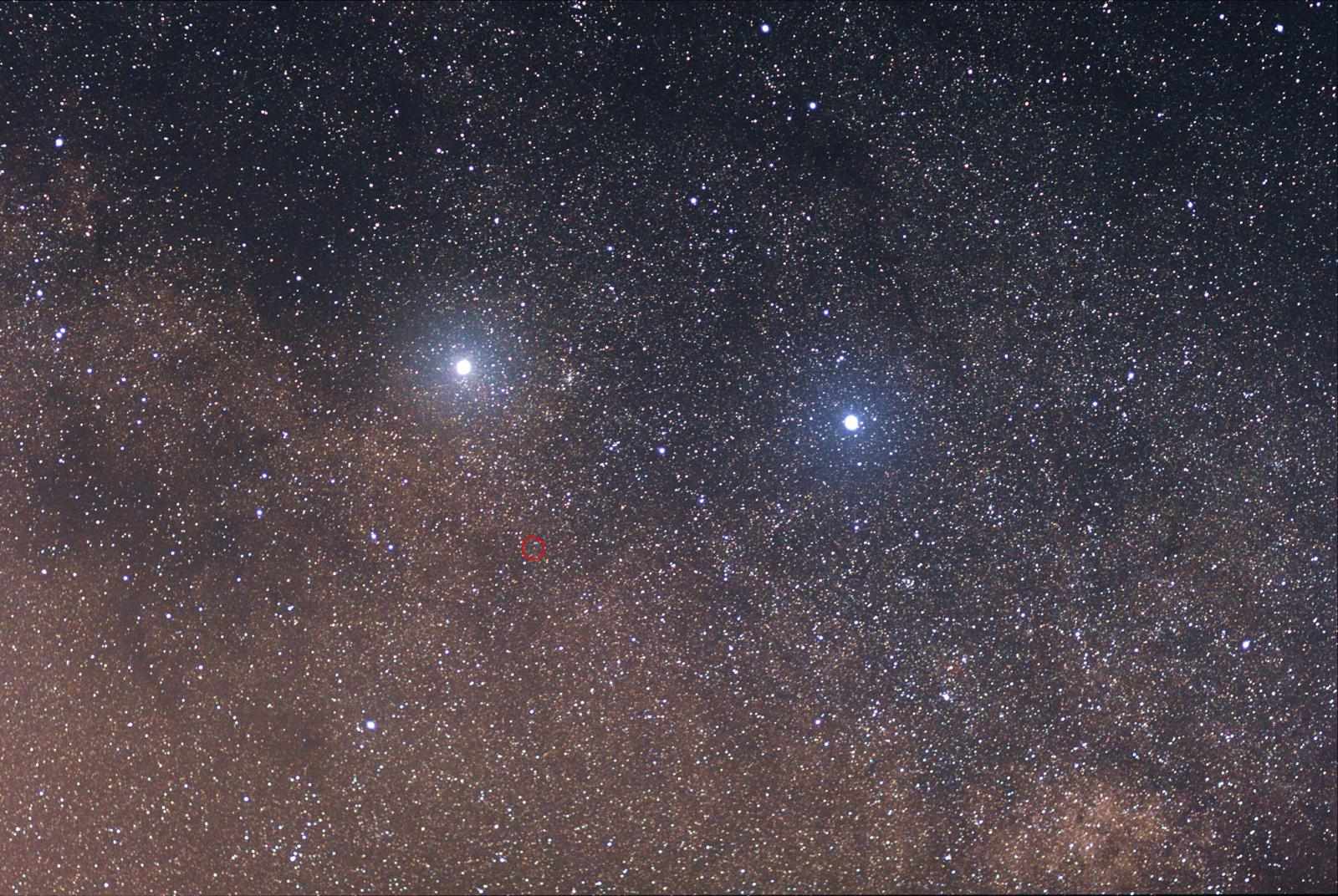
So we spent a few hours standing there, our cameras on tripods. I got several shots I was pretty proud of, the Milky Way bannering across the sky above the lighthouse, the waves below. A lovely way to spend a night.
The next day, I sent a good friend one of my Milky Way shots. I thought he'd ooh and aah. Instead, I got this cryptic line from him: "Did you see any traces of sugar?"
I scratched my head for a while. Even allowing for the eccentricities I know in him, this was a puzzler. What on earth, or the Milky Way, was he getting at? Then he sent me something else - a link to a news item with an intriguing headline: A Sweet Surprise: Scientists Find Sugar Deep in Our Galaxy.

Suddenly a certain candy bar acquires new significance.
More seriously. Our galaxy has billions of stars. But it also has vast spaces separating the stars. Empty spaces, you think. But actually, this so-called "interstellar medium" has plenty of gas and dust. A good way to think of it is as an enormous repository of chemicals. It's what remains when stars die, and it's also a nursery for constant renewal. The chemicals that make up new stars, new planets, new human beings, new you-name-it - well, they had their origins in the interstellar medium.
Which raises the question - what chemicals, exactly? Scientists scour those vast spaces to identify chemicals in the stardust. And one set of scientists recently found ... sugar.
Some clarifications. It's not as if they scooped up a spoonful of sugar from somewhere out in the interstellar medium. No, they detected a sugar molecule out there. But no, it's not as if they were able to see an individual molecule of sugar. They used powerful telescopes and instruments, but not even those can show you a molecule. No, they detected evidence of this molecule.
And there's one more point to keep in mind here. This is not sugar as you and I know it. Even if you could scoop it up, you're not likely to mix it into your morning cup of coffee. The molecule they detected is erythrulose. It occurs naturally in raspberries, but it serves to make that fruit tart, rather than sweet. It is also an active ingredient in certain tanning lotions. This is because it reacts with amino acids in the epidermis to produce a gentle brown tint. There are enough of us humans who yearn to look browner than we actually are, enough who will use such a lotion.
So why is erythrulose called a sugar at all? That's because it fits the definition of a carbohydrate, the large family of generally sweet-tasting - even if many aren't used as sweeteners - carbon-based molecules that includes sugars. In particular, erythrulose's formula is C4-H8-O4. This follows the canonical carbohydrate molecular structure, in which the ratio C:H:O is 1:2:1 - thus "hydrated carbon". Because of its four carbon atoms, it is known as a "tetrose" sugar.
And this is the molecule that scientists detected in a giant gas and dust cloud - it even has a name, G+0.693−0.027 - near the centre of the Milky Way, about 27,000 light years from us. While unexpected, it should actually be no real surprise that they detected erythrulose in this cloud. For it is something of a nursery for chemicals. Scientists have found over 120 different molecules there.
Quick note: again, as you can imagine, it's not as if scientists actually saw, or got an image of, any of these molecules themselves. That's close to impossible through microscopes, some way more impossible at 27,000 light years. So yes, what they did find is evidence of their presence.
In a very real sense, molecular fingerprints.
In space, molecules are constantly spinning and rotating. But the rather astonishing thing is, each molecule spins at one of a few characteristic speeds, which are determined by its specific atomic structure. When it switches from one speed to another, it emits a tiny and very distinct radio signal at a distinct frequency. Erythrulose is no different. Its asymmetrical chemical shape produces its own particular radio wail. So if you detect that "sound", you've found erythrulose.
But what does it take to accomplish this task of detection? Well, imagine sitting in a football stadium filled with 50,000 raucous fans. Among them is one dude who hates football but has been dragged unwillingly to the game by his football-crazy girlfriend. So he's watching The Odyssey on his phone and he's using earphones. The home team scores a goal and the stadium goes absolutely bonkers with noise. On his phone, that's exactly when Odysseus blinds Cyclops. Despite the din, despite the earphones, and despite sitting all the way across the stadium from this dude, you hear Cyclops roar in pain.
That may give you an idea of the kind of needle-in-the-haystack feat this team of astronomers pulled off. They detected erythrulose's tiny signal in a cacophony of radio signals from all the rotating molecules in that cloud: a technique known as "rotational spectroscopy". To do so, they used two powerful radio telescopes to sift out that impossibly faint signature.
All very impressive, but you might wonder again - to what end? Of what possible benefit is it to anyone to know that there are molecules of erythrulose 27,000 light years from us? Though of course, it's really that there were these molecules there 27,000 light years ago. There's no way to know if they are still there. Still, with that caveat accounted for, what have we learned by finding this sugar? Does it matter?
It certainly does. Carbohydrates are like building blocks for life itself. Ribose, for example, a five-carbon sugar, gives its name to ribonucleic acid, or RNA, fundamental to genes. But if that's true, the essential cosmic sugar dilemma is this: how did sugars form on a young Earth? Laboratory experiments mimicking those early conditions don't produce enough of them. So the theory is that they were produced somewhere out in the universe and came to our planet via meteorites and asteroids.
This discovery of erythrulose in G+0.693−0.027 confirms this theory.
Where there's sugar, there may be life. You could say that about G+0.693−0.027. You could say that about planet Earth.















Write a comment ...